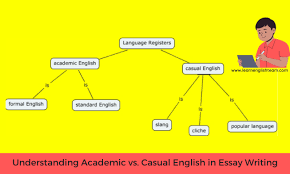
The way we write changes depending on who we’re writing for and why we’re writing. Academic writing and casual writing are two very different styles. One is formal, precise, and evidence-based; the other is relaxed, conversational, and often emotional. Understanding these differences helps students write more effectively and appropriately for each situation.
Academic writing is used in research papers, essays, and reports. Its main goal is to inform or argue logically, not to entertain. The tone must sound professional, confident, and neutral. Casual writing, on the other hand, is used in everyday communication — texting, blogging, or chatting online — where the goal is connection, not precision.
One major difference between the two is word choice. Academic writing uses formal vocabulary. Words like “kids,” “a lot,” or “stuff” might sound fine in conversation but don’t belong in research papers. Instead, you’d use “children,” “many,” or “materials.” In casual writing, however, simpler words feel natural and friendly. The key difference is that academic tone aims for clarity and respect, while casual tone aims for warmth and personality.
Sentence structure also differs. Academic writing uses complete, well-organized sentences with correct grammar and punctuation. Sentences are often longer and more complex. In casual writing, sentences can be shorter, even fragments. It’s normal to write things like, “So, yeah, that was crazy!” or “Can you believe it?” — but that would never fit in a formal essay.
Tone and perspective matter, too. Academic writing avoids personal opinions and emotional language. It focuses on facts, logic, and evidence. For instance, instead of writing, “I think this method is better,” an academic paper would say, “This method is more effective based on the data collected.” Casual writing allows for emotion and personality. You can use “I,” “you,” or “we,” and even jokes or feelings.
Purpose also shapes the difference. Academic writing exists to add knowledge to a field. It must be objective and supported by evidence. Casual writing exists to connect or entertain. It can use storytelling, opinions, and humor. Neither is “better” — they just serve different purposes.
Structure in academic writing is also more organized. You need an introduction, body, and conclusion, often with citations and references. Casual writing doesn’t need that kind of structure — it can jump between ideas freely.
Final Thought:
Academic writing and casual writing are like two languages — both useful in different settings. When you learn to switch between them, you become a stronger communicator. Use academic tone for clarity and respect; use casual tone for connection and creativity.
Leave a Reply