When it comes to personal development, you hear a lot of terms thrown around—“motivation,” “mindset,” “growth mindset,” “self-discipline,” and the list goes on. Honestly, it can get confusing. People often use motivation and mindset growth interchangeably, but the truth is, they are not the same thing. And understanding the difference can literally change the way you approach your life, your goals, and even how you deal with failure.
Let’s break it down.
What is Motivation?
Motivation is… well, it’s that push you feel to do something. It’s the spark. The energy. The “I gotta do this now” feeling. Motivation can come from many sources. Maybe it’s internal, like you want to lose weight or learn a new skill. Or maybe it’s external, like praise from someone else, money, or recognition.
Think about it like this: motivation is like the gas in your car. Without it, you don’t go anywhere. But the gas doesn’t last forever. You know that feeling when you start a new project full of energy, only to find a week later, you just don’t feel like it anymore? That’s because motivation is temporary. It’s fragile.
And here’s the kicker: motivation can be misleading. You can feel motivated to start a new habit, a new routine, or a new goal, but if you rely only on motivation, you’re likely to give up when obstacles come. Motivation alone isn’t enough to sustain long-term growth or achievement.
What is Mindset Growth?
Now, mindset growth is a completely different animal. It’s about how you think about yourself, your abilities, and your potential. Mindset growth isn’t about feeling pumped up or inspired today—it’s about consistently believing that you can improve, that failure is just part of the process, and that effort matters more than instant results.
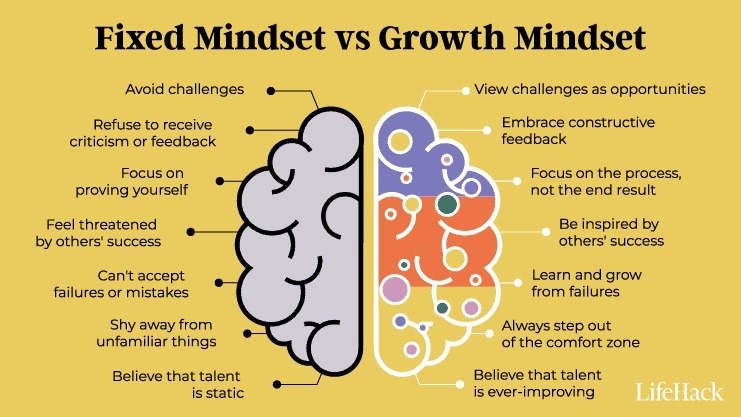
The concept of a growth mindset was popularized by Carol Dweck, a psychologist. She explains that people with a growth mindset believe their abilities can be developed through dedication and hard work. Compare that with a fixed mindset, where people believe they’re born with a certain talent, and that’s it.
So, while motivation is external energy, mindset growth is internal perspective. One is a short-term push, and the other is a long-term orientation.
The Key Differences Between Motivation and Mindset Growth
1. Duration
Motivation is temporary. You feel it, then it fades. It’s situational. Mindset growth is enduring. It’s a way of thinking. You might feel unmotivated some days, but a growth mindset keeps you moving forward regardless.
2. Dependency
Motivation depends on circumstances. A motivational speech, a social media post, or a reward can trigger it. Mindset growth doesn’t depend on external factors. It’s self-sustaining. Even when things go wrong, someone with a growth mindset keeps learning.
3. Focus
Motivation focuses on “wanting to do something” right now. Mindset growth focuses on long-term improvement. Motivation is about energy. Mindset growth is about thinking differently about challenges, mistakes, and setbacks.
4. Reaction to Failure
Here’s where the difference really shows. Motivated people might give up when they fail because their energy tank ran out. People with a growth mindset see failure as feedback. They don’t quit. They adapt, adjust, and try again.
5. Source of Drive
Motivation is often emotional—it makes you feel excited, pumped, ready to conquer the world. Mindset growth is cognitive—it’s about how you process challenges, how you interpret setbacks, and how you maintain persistence.
How Motivation and Mindset Work Together
Now, it’s not like motivation is useless. Far from it. In fact, motivation and mindset growth complement each other. Motivation gets you started. It gives you the push to take the first steps. Mindset growth keeps you going when motivation fades.
Imagine you’re training for a marathon. Motivation might get you to sign up, wake up early to run for a few weeks, feel the rush of accomplishment. But eventually, life gets busy, energy dips, or weather is bad. Without a growth mindset, you might quit. But with mindset growth, you accept that skipping a day isn’t the end of the world, you learn from your mistakes, and you keep improving.
Common Misconceptions
- Motivation is enough: Nope. People often think if they just “get inspired,” success will automatically follow. That’s rarely true. Motivation is fleeting. Mindset growth is what sustains effort.
- Growth mindset means constant positivity: Not exactly. It doesn’t mean you’ll always feel good or confident. Growth mindset means you recognize challenges and setbacks as opportunities to learn, not reasons to quit.
- You either have it or you don’t: Both motivation and growth mindset can be developed. You can learn strategies to increase motivation and habits to cultivate a growth mindset. They are skills, not traits.
Ways to Develop Mindset Growth
- Embrace challenges: Instead of avoiding hard tasks, see them as opportunities to grow.
- Learn from criticism: Feedback isn’t an attack—it’s information to improve.
- Celebrate effort, not just results: Progress is built on consistent effort.
- Reflect regularly: Understand what worked, what didn’t, and why.
- Adopt curiosity: Ask questions. Explore. Keep learning.
Ways to Boost Motivation
- Set clear goals: Specific, achievable goals give direction.
- Visualize success: Imagine the outcome—it creates excitement.
- Create a routine: Habits can reduce the reliance on motivation alone.
- Use rewards: Small rewards reinforce positive behaviors.
- Surround yourself with support: People, reminders, and positive environments help sustain motivation.
Conclusion
In short, motivation is the fuel that starts the engine, but mindset growth is the engine itself. Motivation can get you moving, but without a growth mindset, you’ll stall at the first bump in the road. Mindset growth, on the other hand, helps you endure, adapt, and keep improving over time, even when motivation disappears.
If you really want to succeed in life, in learning, or in personal growth, focus on developing a growth mindset first. Motivation will come and go, but the mindset you cultivate can carry you through the ups and downs, helping you turn challenges into opportunities and mistakes into lessons.
So next time you feel unmotivated, don’t panic. Ask yourself: do I have the mindset to keep going anyway? Because that, more than any burst of motivation, is what determines lasting success.
Leave a Reply